
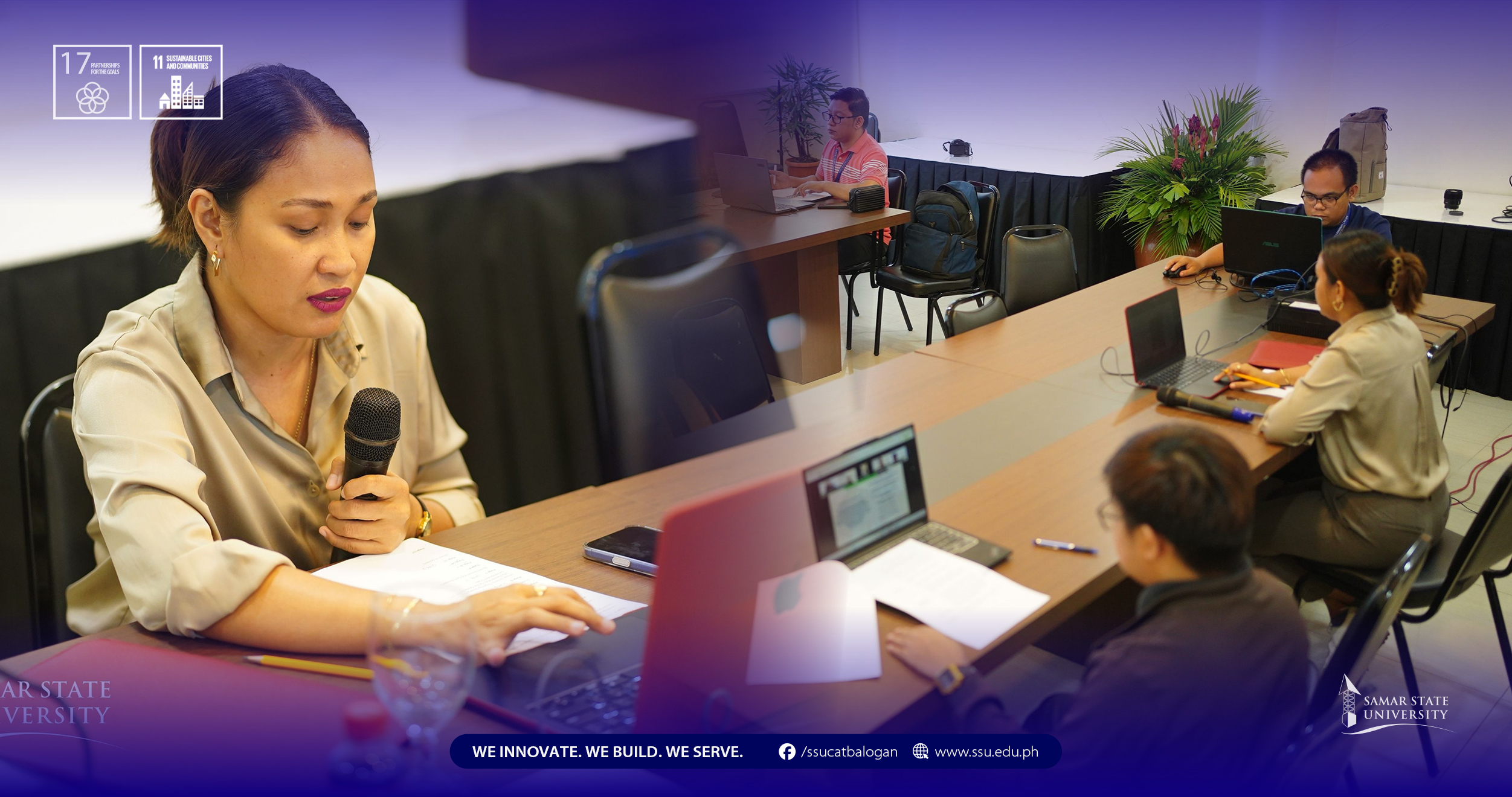
CATBALOGAN CITY, Samar — Samar State University (SSU) co-hosted the Eastern Visayas International Volunteer Year (IVY) 2026 Regional Forum alongside the Philippine National Volunteer Service Coordinating Agency (PNVSCA) on July 9, gathering volunteer leaders, government agencies, higher education institutions, local government units (LGUs), and civil society organizations via Zoom and Facebook Live to reinforce volunteerism as a driving force for sustainable regional development.
Delivering the opening remarks, Dr. Redentor S. Palencia, President of Samar State University, underscored that “as volunteers, it is important that we empower ourselves to empower others,”, emphasizing that volunteerism begins with personal growth and a commitment to serve communities.
In his keynote message, Mr. Donald James D. Gawe, CESO III, Executive Director of PNVSCA, highlighted volunteerism as an essential mechanism for national development. He described volunteerism as a practical pathway for engaging citizens, promoting inclusive growth, and ensuring the meaningful participation of all sectors. He added that it provides a platform for exchanging experiences and should be embedded in government policies, programs, and institutional practices.
Meanwhile, Governor Carlos Jericho Petilla of Leyte, Chairperson of the Regional Development Council VIII, emphasized that volunteerism is a selfless act of giving back to the community and commended volunteers for their unwavering dedication, compassion, and commitment to the common good, stressing that the primary motivation of every volunteer is service to others.
Representing Samar State University, Dr. Marife M. Mustacisa, Focal Person for Volunteerism, presented the university’s volunteer engagement initiatives anchored on its mandate in instruction, research, extension, and production. She highlighted SSU’s commitment to delivering livelihood and skills development programs even in Geographically Isolated and Disadvantaged Areas (GIDAs) across Samar. She likewise emphasized the university’s role as a leading learning institution that mobilizes its research and extension expertise to promote sustainable community development.
Mr. Jessemar B. Alamin, Vice President for Internal Affairs of Alpha Phi Omega (APO) Theta Alpha Chapter, shared the organization’s long-standing volunteer initiatives, including community outreach programs, disaster preparedness and response, environmental stewardship activities, youth and education initiatives, partnerships with various organizations, and financial assistance programs for communities in need.
Ms. Ma. Ivy Morillo-General, 2026 Local Organization President of JCI Matuguinao-Makarato, presented the organization’s diverse volunteer programs, including initiatives that empower former rebels, advocacy programs for senior citizens, peace and disaster preparedness campaigns, youth digital empowerment, the “Voluntourist: Travel with a Heart” program, tree-planting activities, the Youth Leadership Excellence Award, and collaborative projects with LGUs, national government agencies, and civil society organizations. She noted that beyond awards and recognition, the organization’s greatest achievement has been witnessing lives transformed through volunteer service.
From the Department of Social Welfare and Development (DSWD) Region VIII, Ms. Jennifer C. Paa discussed the accomplishments of the KALAHI-CIDSS program, emphasizing that communities are regarded not merely as beneficiaries but as active partners in development. Since its pilot implementation in 2003, KALAHI-CIDSS projects have remained functional and sustainable, continuing through the COVID-19 pandemic and beyond by institutionalizing the Community-Driven Development (CDD) model.
Representing the LGU Ormoc City, Mr. Jules S. Albarico, Focal Person for Volunteerism, showcased the city’s institutionalized volunteerism program through the establishment of the Ormoc City Volunteer Council under a city ordinance. He highlighted initiatives that include a volunteer database system, dedicated technical budget for volunteerism, information and education campaigns, capacity-building activities, partnerships, and streamlined volunteer assistance. The city also recognizes and protects volunteers through the Ormoc Kabayanihan Awards and Volunteers Summit, certificates of recognition, insurance coverage, and the Ormoc City Educational Fund Assistance Grant.
Mr. Marlon E. Lora, Volunteerism Focal Person and NSTP Director of Eastern Visayas State University (EVSU), presented the university’s flagship volunteer programs, namely tree-planting activities, campus and city clean-up drives including coastal clean-up initiatives, bloodletting activities, personal volunteer work undertaken by university personnel and officials, and the deployment of the MOCCOV Rescue Vehicle during disaster response operations.
Representing Southern Leyte State University (SLSU), Mr. Exekiel Ed A. Elizan, Head of the Center for Foreign Language and Culture, shared the university’s extension initiatives, which are anchored on the distinct expertise and flagship programs of its various campuses. He emphasized that these extension programs strengthen community partnerships while responding to local development needs through volunteerism.
Following the presentations, participants took part in a collaborative workshop facilitated by Mr. Emir Lenard Sicangco of Tarlac State University. Using the Mentimeter platform, participants identified key challenges confronting volunteerism in the region and proposed possible solutions, providing valuable inputs for strengthening volunteer engagement and regional collaboration.
The forum concluded with closing remarks from Dr. Felisa Gomba, SSU’s Vice President for Research, Extension, and Innovation for Development, who reminded the 200 participants that every activity, proposal, and initiative begins with the genuine desire to help others. She emphasized that development becomes meaningful when people work together toward the common good, encouraging participants to continue advancing volunteerism as a shared responsibility for building stronger, more resilient, and more inclusive communities.
The Eastern Visayas IVY 2026 Regional Forum reaffirmed the region’s commitment to institutionalizing volunteerism across government, academia, and civil society, recognizing volunteers as indispensable partners in achieving sustainable development and improving the lives of communities throughout Eastern Visayas.